
Two days is enough for Vienna if you stop trying to see everything. The city’s great sights sit in three clusters: Schönbrunn out west on the U4, the museum quarter and old town in the middle, and the Belvedere just south-east of the Ring. The Danube Tower sits across the river on the U1. Plan around those clusters and you spend your time inside buildings rather than crossing the city.
Here is a route that works, with the times the doors actually open.
Day one: the palace, then the paintings
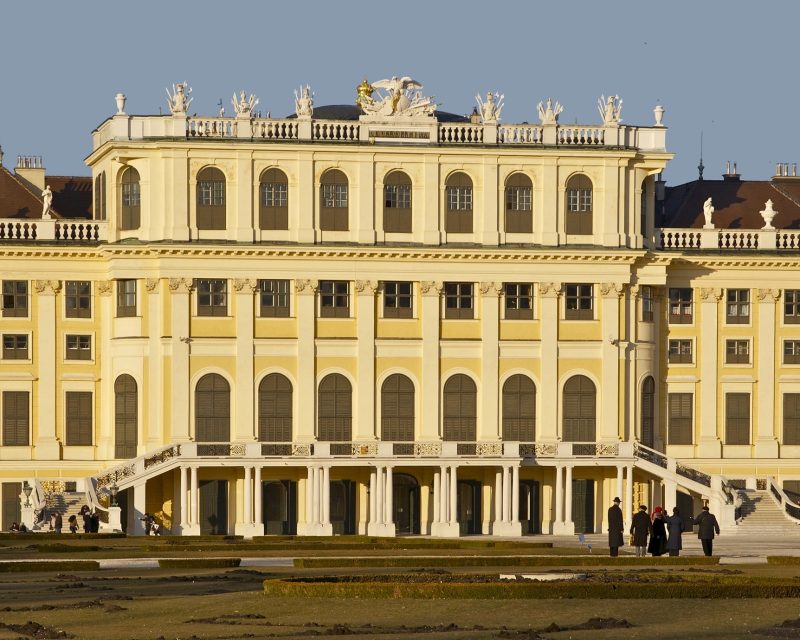
08.30 — Schönbrunn
Take the U4 to Schönbrunn station. The main gate is a five to seven minute walk from the platform, and trams 10 and 60 and bus 10A stop directly outside it. The palace opens at 8.30 every day of the year, and the first hour is the quietest hour you will get.
The Grand Tour walks the full piano nobile: the Great Gallery where the Congress of Vienna danced, the Vieux-Laque Room, the Chinese cabinets and Maria Theresa’s private chambers. Allow around 75 minutes with the audio guide. The shorter State Apartments route covers the ceremonial rooms in about 40 minutes if you would rather spend the time outside. Either way, book a slot: entry to the palace is timed and the ticket you hold is for a stated time, not for the day.
Afterwards, the gardens are free and open from 6.30 in the morning. Walk up the hill behind the Neptune Fountain to the Gloriette. It takes about fifteen minutes at a normal pace, and the view back down the parterre to the palace is the photograph everyone comes for. Full details on the routes and what each ticket opens are on our Schönbrunn Palace page.
13.00 — lunch, then the Kunsthistorisches
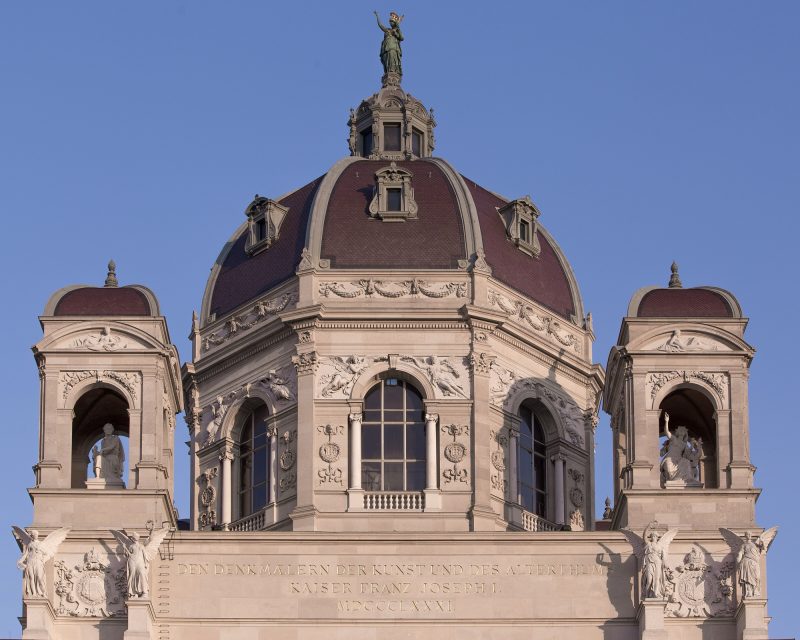
U4 back to Karlsplatz, eat, then walk ten minutes up to Maria-Theresien-Platz. The Kunsthistorisches Museum faces the Natural History Museum across a square of chestnut trees, and the two buildings are mirror images of each other.
Three hours is the honest figure for a first visit. Go straight up the staircase past Canova’s Theseus to the Picture Gallery on the first floor. Gallery X holds twelve panels by Pieter Bruegel the Elder, the largest collection of his work anywhere: Hunters in the Snow, The Tower of Babel, Peasant Wedding, Children’s Games. Nowhere else can you stand in one room and see that many. Then Vermeer’s The Art of Painting, Raphael’s Madonna in the Meadow, and the Velázquez portraits of the Spanish infantas who were painted to be posted to Vienna as marriage prospects.
If you have energy left, the Kunstkammer downstairs holds Cellini’s gold salt cellar, the Saliera. The museum runs to 6pm, and to 9pm on Thursdays, which is the single most useful fact in this article if your Thursday is free.
Evening
Walk the Ring or ride tram 1 or 2 along it. Neither line does the full circle, so stay on for twenty minutes, get off, and cross to the other. Dinner in the old town, then bed.
Day two: Klimt, Mozart and the view
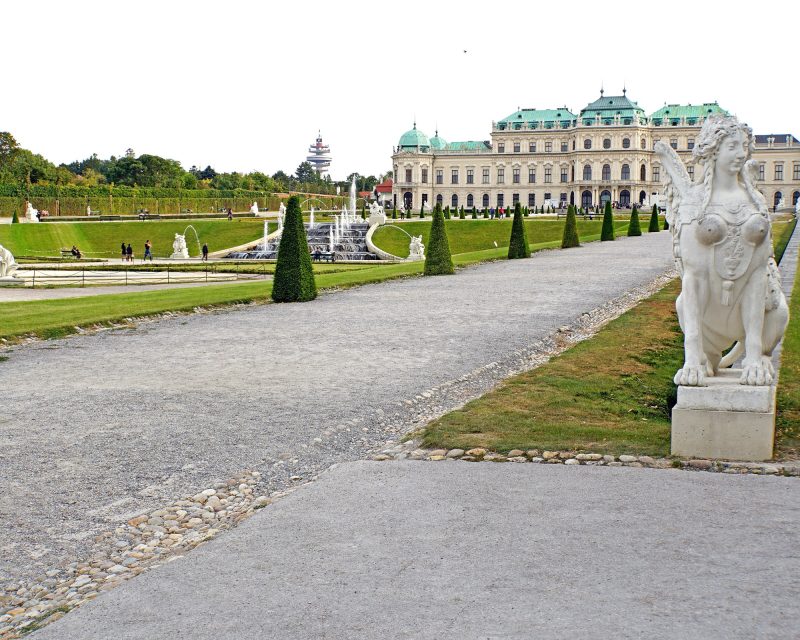
09.00 — Upper Belvedere
Tram D runs from the Ring to the Schloss Belvedere stop and leaves you at the main gate. The Upper Belvedere opens at 9am daily, and the first half hour in front of The Kiss is worth setting an alarm for. By eleven the room is full.
The Belvedere holds twenty-four Klimt paintings, the largest group in the world, alongside Schiele, Kokoschka and Messerschmidt’s alarming character heads. The building itself is the other half of the visit: Prince Eugene of Savoy’s summer palace, and the Marble Hall where the Austrian State Treaty was signed on 15 May 1955. Two hours covers it comfortably. See our Belvedere page for what the Upper, Lower and Belvedere 21 tickets each include.
12.30 — the old town and Mozarthaus
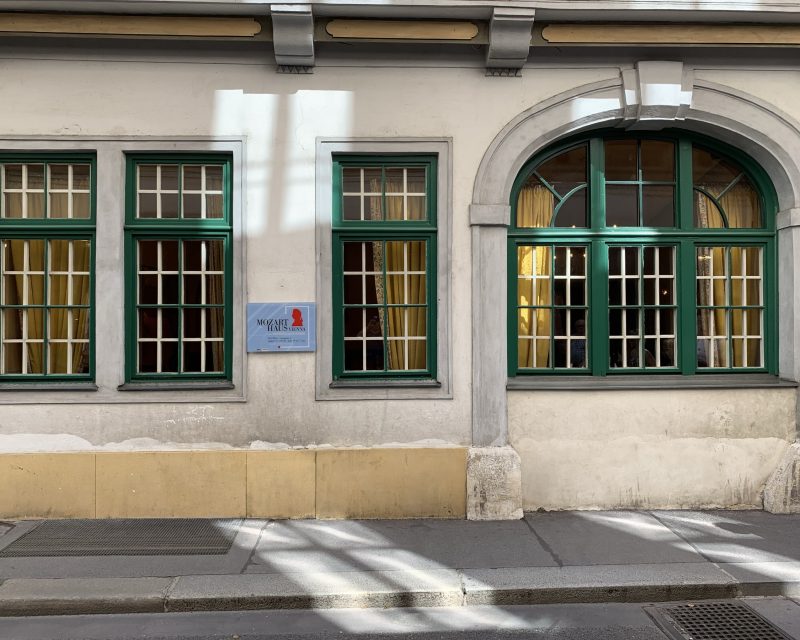
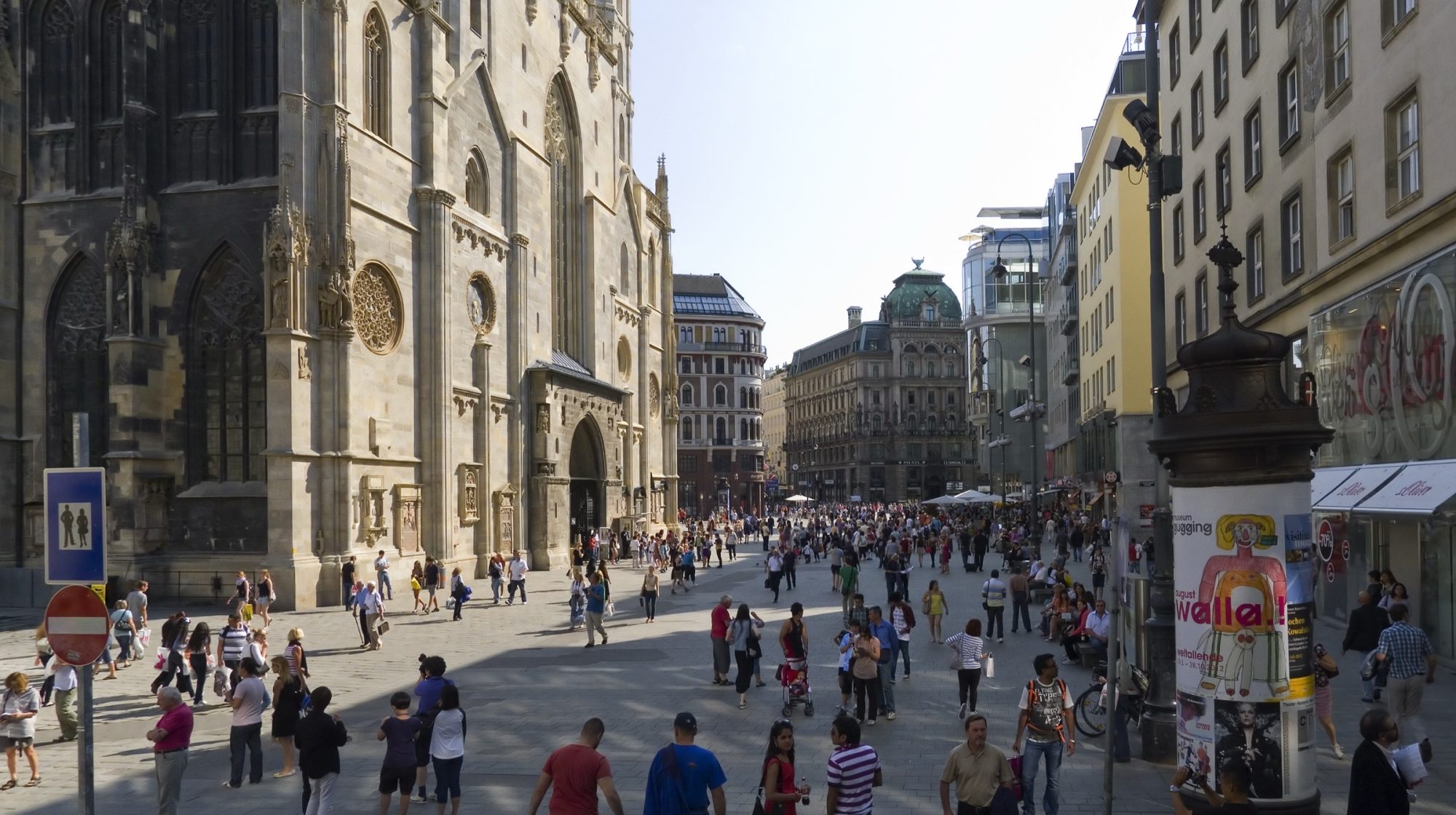
Tram D back to the Ring, then walk into the centre. Mozarthaus Vienna is at Domgasse 5, about two minutes from Stephansplatz on the U1 and U3, tucked down a lane behind the cathedral where most people never turn.
This is the only Viennese flat Mozart lived in that still stands. He took it in 1784 and stayed until 1787, and it was the largest and most expensive he ever rented. He wrote The Marriage of Figaro here, which is why Viennese call it the Figarohaus. The flat is on the first floor; two further floors carry the exhibition. An hour is right, ninety minutes if you linger over the Magic Flute hologram. It is open daily 10am to 7pm, last admission 6.30pm.
Late afternoon
Coffee. Sit down in a proper Kaffeehaus and order a Melange, and do not feel rushed out of the chair. That is the point of them.
19.30 — the Donauturm
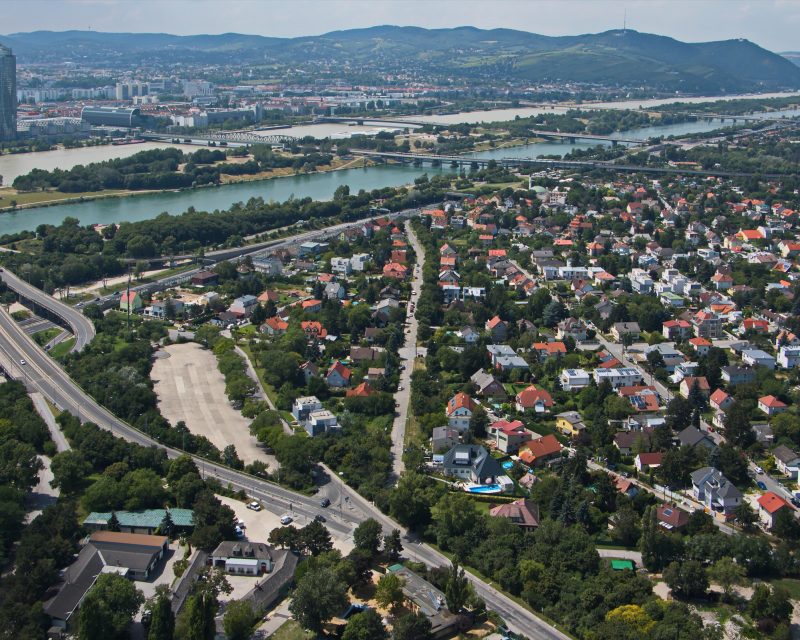
Finish above the city. Take the U1 to Kaisermühlen-VIC or Alte Donau, or the U6 to Neue Donau, then bus 20A to the Donauturm stop. The express lift climbs to the open-air deck at 150 metres in about 35 seconds. From the top you can trace the whole day: Schönbrunn’s hill to the west, the Ring’s ribbon of green, the Danube splitting into old arm and new. The revolving café at 160 metres and the restaurant at 170 metres each complete one turn every twenty minutes. Our Donauturm page has the current hours, which shift with the season.
What to change if you only have one full day
Drop Schönbrunn or drop the museums, not both halves of each. Schönbrunn plus the gardens plus the Donauturm at dusk is a good day. So is the Kunsthistorisches, Mozarthaus and the Belvedere without ever leaving the inner districts. Trying to fit the palace and two galleries into one day means queuing more than you look.
When you know which mornings you want where, pick your time slots on our attractions page and the tickets arrive by email.