
Every museum guide tells you what to see. Almost none tells you how long it takes, which is the only question that matters when you have three days and a list of eleven things. Here are Vienna’s museums sorted by the time they genuinely need, with a plan for each length.
One hour: Mozarthaus Vienna
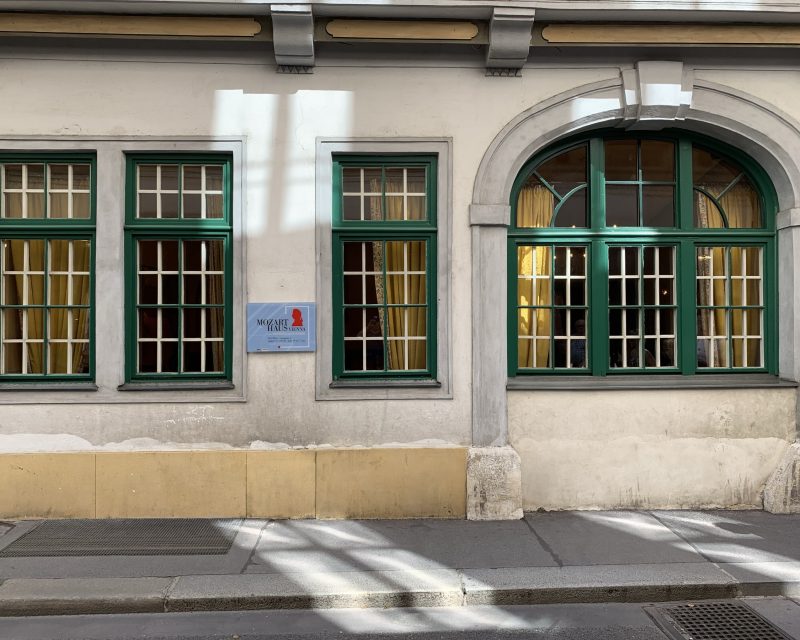
Domgasse 5, two minutes from Stephansplatz on the U1 and U3, down a lane behind the cathedral that most visitors walk past. Open daily 10am to 7pm, last admission 6.30pm.
This is the only flat Mozart occupied in Vienna that still stands, and it is not a reconstruction of somewhere he might have been. He signed for it in 1784 and left in 1787. It was the largest and most expensive home he ever rented, four rooms, two cabinets and a kitchen, and he wrote The Marriage of Figaro and three of the six quartets dedicated to Haydn while living in it. Vienna has called it the Figarohaus ever since.
The flat is on the first floor. Two more floors carry the exhibition: the Vienna he arrived into, the gambling and the debts, the Magic Flute hologram, the Figaro Parallelo installation showing how directors have staged the opera across the world, and a closing room on the Requiem and his last months.
An hour does it properly. Ninety minutes if you sit through the media pieces. It is one of the few Vienna museums that does not punish a short visit, which makes it the right thing to slot into an awkward gap in an afternoon. More on our Mozarthaus Vienna page.
Two hours: the Upper Belvedere
Prinz-Eugen-Straße 27, open daily from 9am. Tram D stops at the gate.
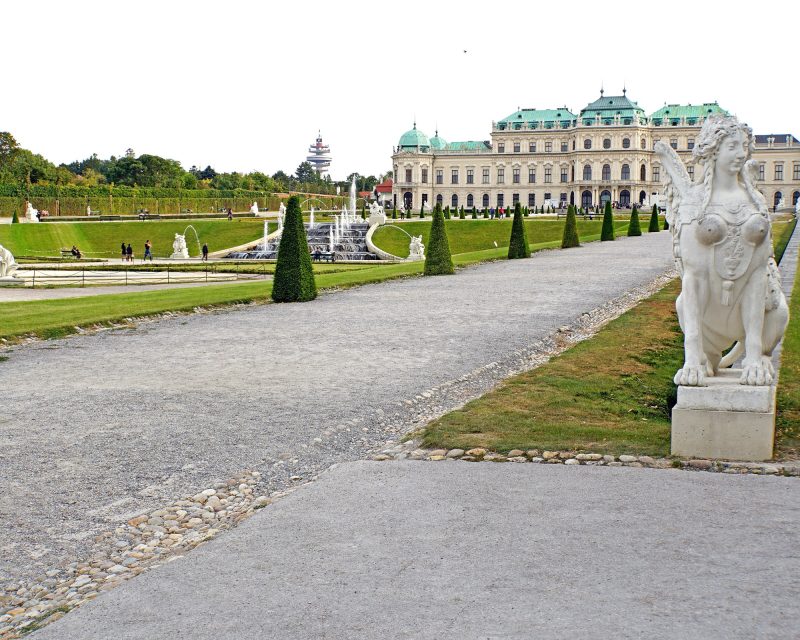
The Belvedere holds twenty-four paintings by Gustav Klimt, more than anywhere else on earth, and one of them is The Kiss. People come for that single canvas and are then ambushed by the rest: Judith, the Schiele room, Kokoschka, and Franz Xaver Messerschmidt’s character heads, a series of lead and alabaster busts pulling expressions that look like screenshots from a nightmare.
The building is the second half of the ticket. Prince Eugene of Savoy built it as a summer palace, and you climb a Baroque staircase to reach modern Austrian painting. The Marble Hall is where the Austrian State Treaty was signed on 15 May 1955, ending Allied occupation, and the balcony where it was shown to the crowd is still there.
Two hours is the sweet spot: forty minutes for Klimt, forty for everything else on that floor, forty for the building and the terrace view down the formal gardens towards the city. The Lower Belvedere at Rennweg 6 and Belvedere 21 at Arsenalstraße 1 are separate buildings with their own tickets and their own hours, and combination tickets exist if you want them. Details on our Belvedere page.
Three hours minimum: the Kunsthistorisches Museum
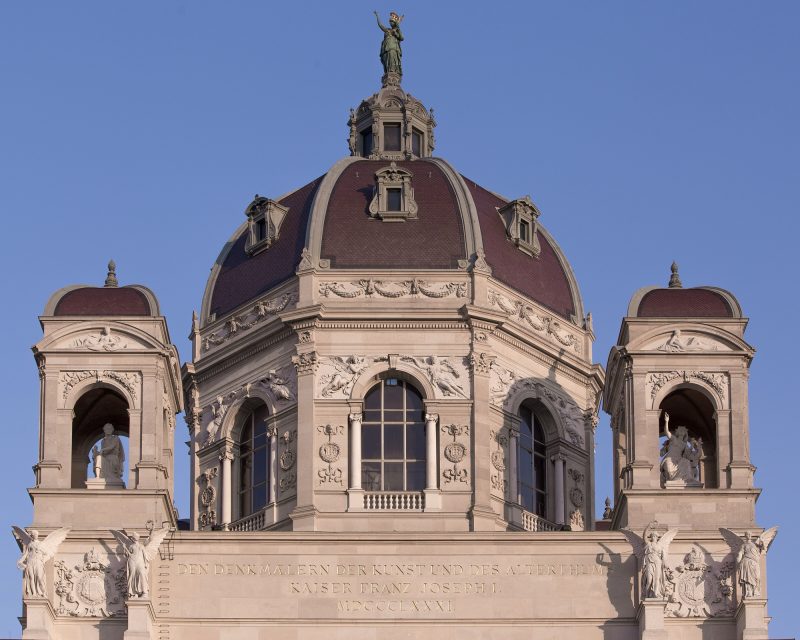
Maria-Theresien-Platz, on the Ring. Open 10am to 6pm, Thursdays until 9pm, and closed on Mondays from September through May. In June, July and August it opens on Mondays too. Trams 1, 2, D and 71 stop at Burgring, and it is a ten-minute walk from Stephansplatz through the Hofburg.
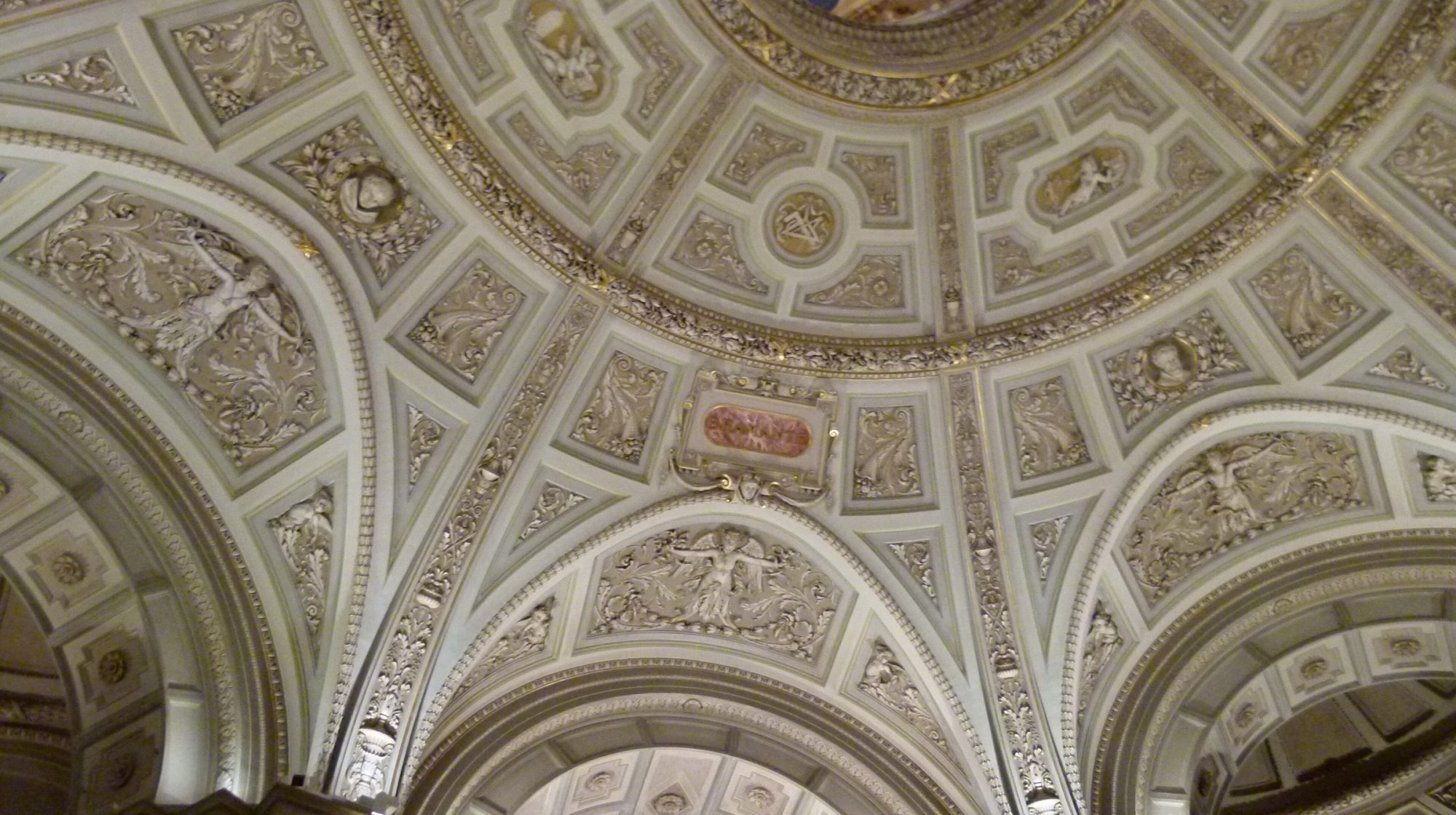
Three hours is the floor, not the target. The Picture Gallery alone is the accumulated taste of the Habsburgs across four centuries, and it is arranged so that the good things are not hidden.
Go up the main staircase, past Canova’s Theseus Slaying the Centaur and under Klimt’s early spandrel paintings, and turn to the Picture Gallery on the first floor.
- Gallery X: twelve panels by Pieter Bruegel the Elder, the largest group anywhere. Hunters in the Snow, The Tower of Babel, Peasant Wedding, Children’s Games. Give this room 45 minutes on its own and you will still leave early.
- Vermeer’s The Art of Painting, one of only around 35 accepted Vermeers.
- Raphael’s Madonna in the Meadow, Caravaggio, Titian, Rubens by the wall-load.
- The Velázquez portraits of the Spanish infantas, painted in Madrid and posted to Vienna so the Habsburg cousins could see who they were marrying.
Downstairs, the Kunstkammer holds Cellini’s Saliera, a gold and enamel salt cellar made for a French king, stolen in 2003 and recovered in a forest three years later. The Egyptian and Near Eastern Collection has real burial chambers rebuilt inside the museum, with original columns from Egypt.
Four to five hours is a proper visit. If you have three, do the Picture Gallery and the Kunstkammer and skip antiquities. If you have ninety minutes, do Bruegel, Vermeer and the Saliera and accept that you are coming back. Our Kunsthistorisches Museum page has current hours and admission.
A full day: Schönbrunn
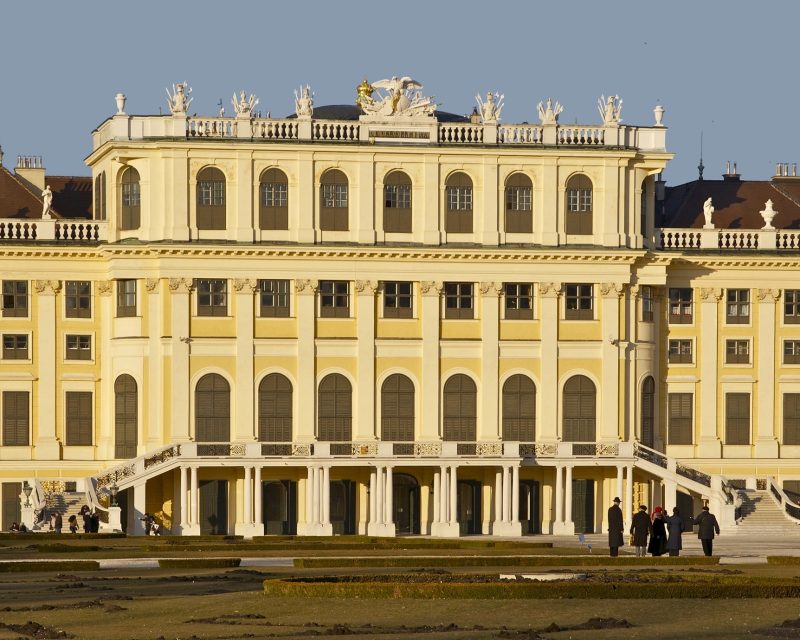
Not a museum, but it belongs on the list because people budget two hours for it and lose an afternoon.
The palace tour is 40 or 75 minutes depending on the ticket. The gardens are a landscape, not a courtyard: the walk to the Gloriette and back is close to an hour at a gentle pace, and the maze, the Privy Garden and the Orangery Garden are each separate. Add the zoo, which is the oldest in the world, and you have a full day. Our Schönbrunn Palace page sets out what each ticket covers.
The short version
- Gap in the afternoon: Mozarthaus, one hour.
- A clear morning: Upper Belvedere, two hours, arriving at nine.
- Half a day and an appetite for painting: Kunsthistorisches, three hours or more.
- A whole day and good weather: Schönbrunn.
Whichever fits your days, entry at all four is timed, so it helps to fix the hour in advance. You can pick a slot on our attractions page whenever you are ready.