
Schönbrunn Palace
The Habsburgs’ summer palace, its state rooms and its Baroque park
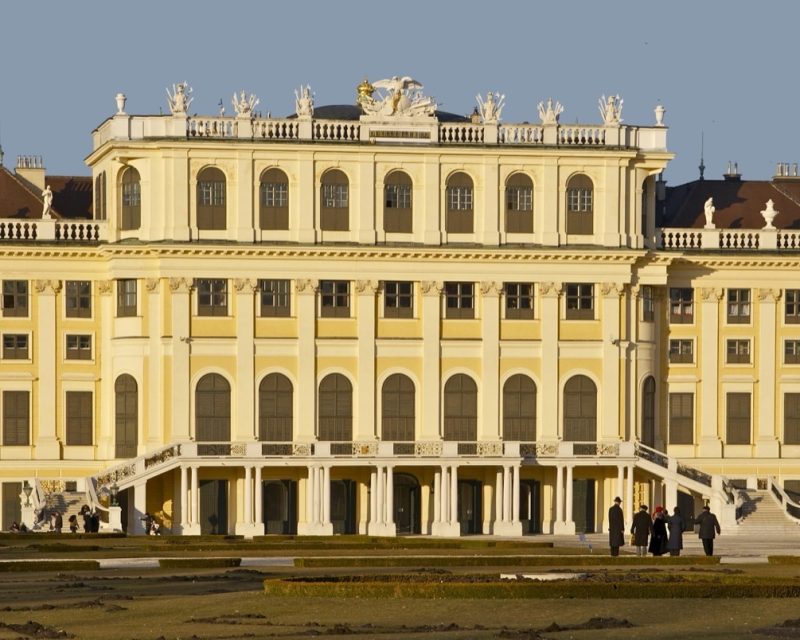
Schönbrunn was the Habsburgs’ summer address for the better part of two hundred years, and it still feels like a house rather than a monument. You come in by the Blue Staircase, and within a few rooms you are standing in Franz Joseph’s study, where the emperor started work at five in the morning at a desk that looks almost austere, and then in the bedroom where he died in 1916. A door or two later the register changes completely. The Great Gallery opens out — 43 metres long and almost ten wide, white and gold beneath ceiling frescoes — the room where the court danced and where the Congress of Vienna spent its evenings.
What to do first
Go up to the piano nobile early. The state rooms are the part of Schönbrunn that sells out, and the first slot of the day is the only time the Great Gallery is quiet. Past it lie the rooms from Maria Theresa’s time, which are stranger and better than most visitors expect: the Vieux-Laque Room panelled in black Chinese lacquer, the Millions Room lined with rosewood and Indo-Persian miniatures, the Blue Chinese Salon, the Hall of Mirrors in gilt Rococo. An audio guide is handed out free once you are inside, in more than twenty languages.
The park
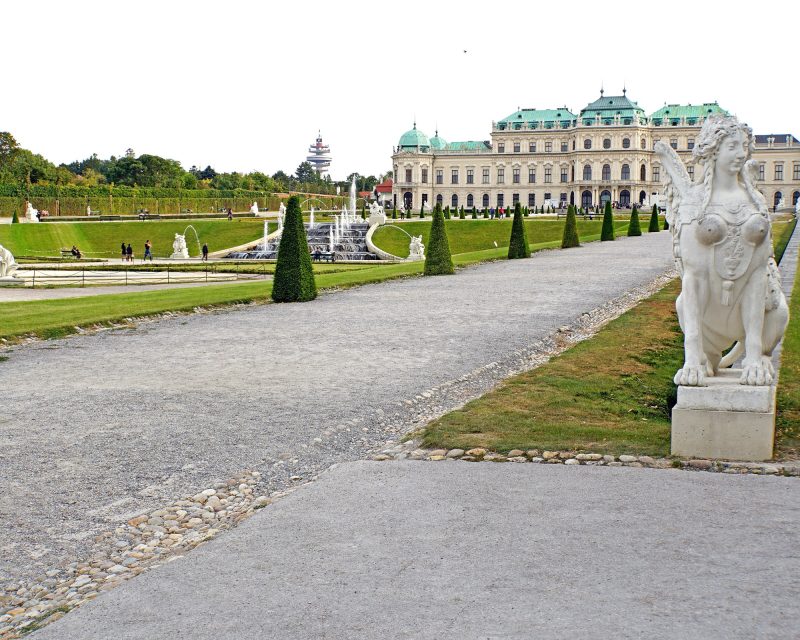
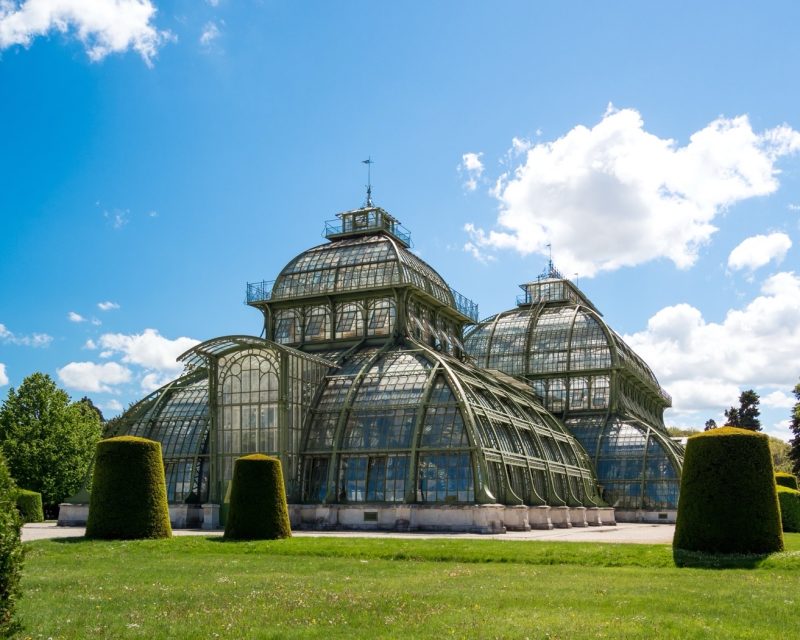
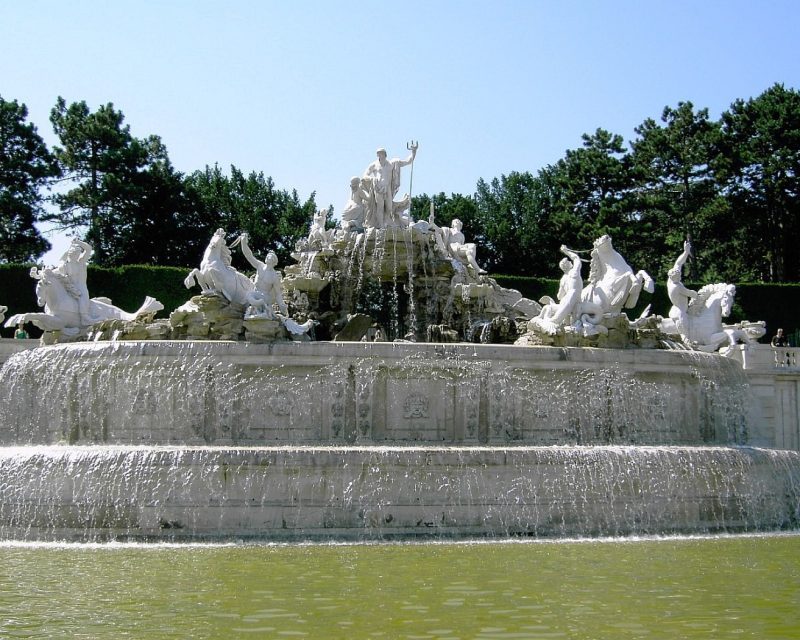
The gardens cost nothing and open at half past six in the morning, hours before the palace does. Walk the central parterre out to the Neptune Fountain, then take the hill behind it up to the Gloriette — a colonnade raised in 1775 as an eye-catcher, now a café with the widest free view in the 13th district: the palace below you, the city and St Stephen’s spire beyond. Off to one side is Tiergarten Schönbrunn, founded in 1752 by Maria Theresa’s husband, Franz Stephan of Lorraine, and the oldest zoo in the world still running. Near it stand the Palm House and the hedge Maze.
Why it matters
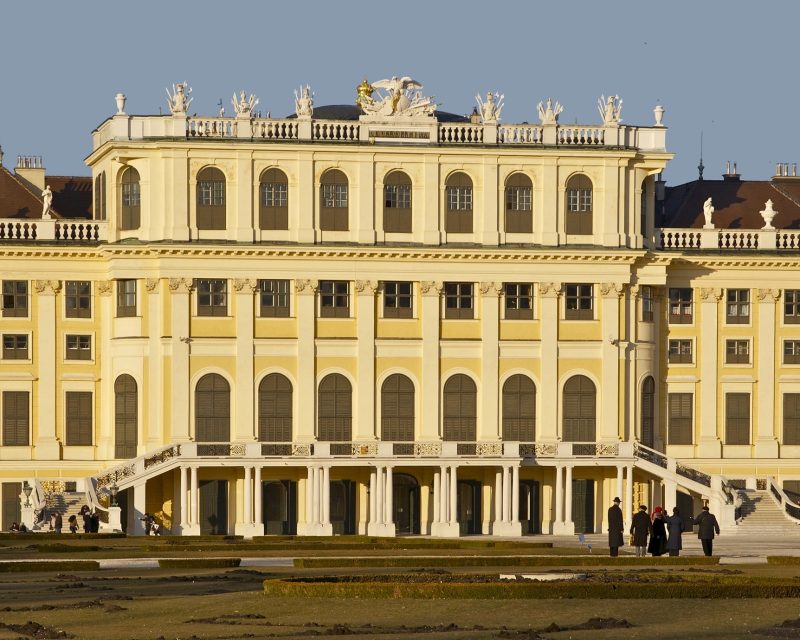
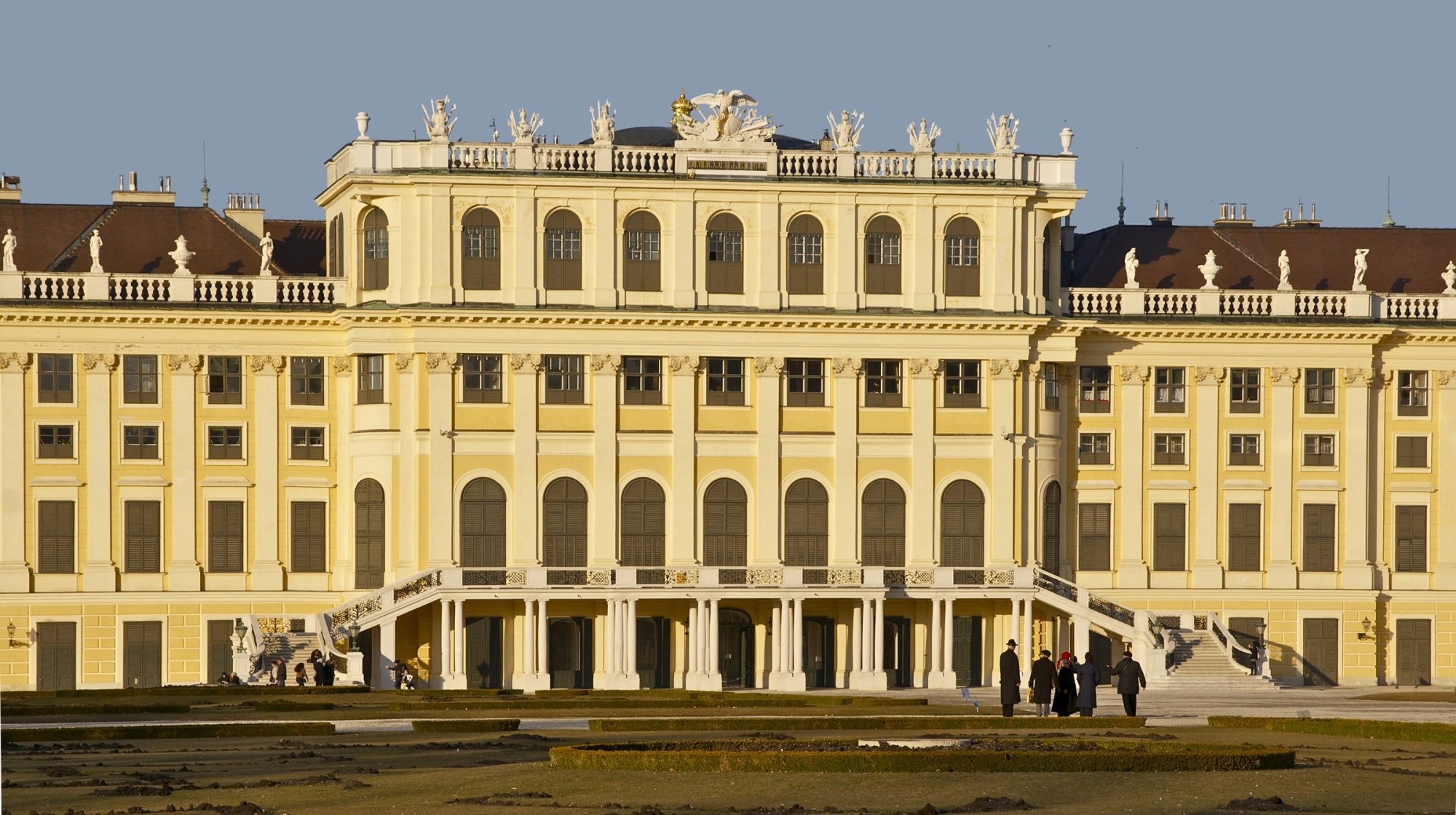
This was hunting ground before Leopold I asked Johann Bernhard Fischer von Erlach for a palace here in the 1690s. Maria Theresa turned it into the summer residence you walk through now, in the ochre wash that Vienna still calls Schönbrunn yellow. The monarchy ended here in 1918. UNESCO inscribed the palace and gardens on the World Heritage list in December 1996.
Highlights
- The Great Gallery — 43 metres of white and gold, still used for state occasions
- Franz Joseph’s study and the room in which he died in 1916
- The Millions Room, panelled in rosewood and set with Indo-Persian miniatures
- The Gloriette on the hill, with a café and the widest view over the palace
- Tiergarten Schönbrunn, founded in 1752 and the oldest zoo in the world
Good to know
- Entry to the state rooms is by timed slot, and slots sell out in high season — book ahead
- Last admission to every attraction on the site is 45 minutes before closing
- Photography is allowed in the state rooms without flash, tripod or selfie stick
- A cloakroom takes coats and bags; dogs, bicycles and drones are not permitted on the grounds
- The audio guide is free and covers more than 20 languages; the park itself is free and opens at 06:30
Visitor information
- Opening hoursPalace daily 08:30–17:30 · to 18:00 in Jul–Aug, to 17:00 from 3 Nov · park from 06:30 · last admission 45 min before closing
- Typical visit2–4 hours (palace and park)
- LocationSchönbrunner Schloßstraße 47, 1130 Vienna · 13th · Hietzing
- Getting thereU4 Schönbrunn; trams 10 and 60; bus 10A
Did you know?
Photographs
Booking conditions
Timed entry: your ticket is valid for the date and time slot you choose at checkout. Arrive a few minutes early; most attractions stop admitting visitors 30–60 minutes before closing. Tickets are non-refundable, non-changeable and non-transferable once confirmed, in line with each attraction’s own conditions. The price shown on the page is the total price — nothing is added at checkout. If anything is wrong with your order, email us and we will sort it out.