
Vienna is one of the easier European cities to move around, partly because the system is good and partly because the centre is small enough to walk. The trick is knowing which of the two to use. Here is the short version, plus the exact routes to the five sights most visitors come for.
What a ticket costs
Wiener Linien restructured its fares on 1 January 2026. At the time of writing the published rates are around €3.20 for a single journey, roughly €3.00 if you buy it digitally, and €1.60 for children. A 24 Hours Vienna ticket is around €10.20, or €9.70 digitally. A 7 Days Vienna ticket is around €28.90, or €25.20 digitally. Treat all of these as indicative and subject to change, and check the current rate when you buy.
One change catches returning visitors out: the 48-hour and 72-hour tickets were withdrawn from 1 January 2026. For a three-day trip the arithmetic now favours either three 24-hour tickets or the 7-day ticket, depending on how much you move. If you are walking most of the centre and using transport twice a day, singles may still work out cheaper.
A single ticket covers one journey in one direction across U-Bahn, tram, bus and S-Bahn within the core zone, with as many changes as you need. Paper tickets must be validated in the blue machines before you board. Digital tickets are already active. There are no barriers on trams and few on the U-Bahn, which trips people up: nobody stops you boarding, but inspectors are frequent and the fine is not small.
The U-Bahn
Five lines carry almost all visitor traffic: U1, U2, U3, U4 and U6. They are colour-coded on every map and signed by terminus station, so you need to know which end of the line you are heading towards rather than a compass direction.
Trains run every two to three minutes at peak and about every five off-peak, which means you never need to check a timetable. On Friday and Saturday nights and the nights before public holidays the U-Bahn runs all night at roughly fifteen-minute intervals. On other nights the Nightline buses take over: 24 routes, every 30 minutes, from around half past midnight to 5am, most of them meeting at Schwedenplatz.
The four interchanges worth memorising are Karlsplatz (U1, U2, U4), Stephansplatz (U1, U3), Westbahnhof (U3, U6) and Schwedenplatz (U1, U4).
The trams
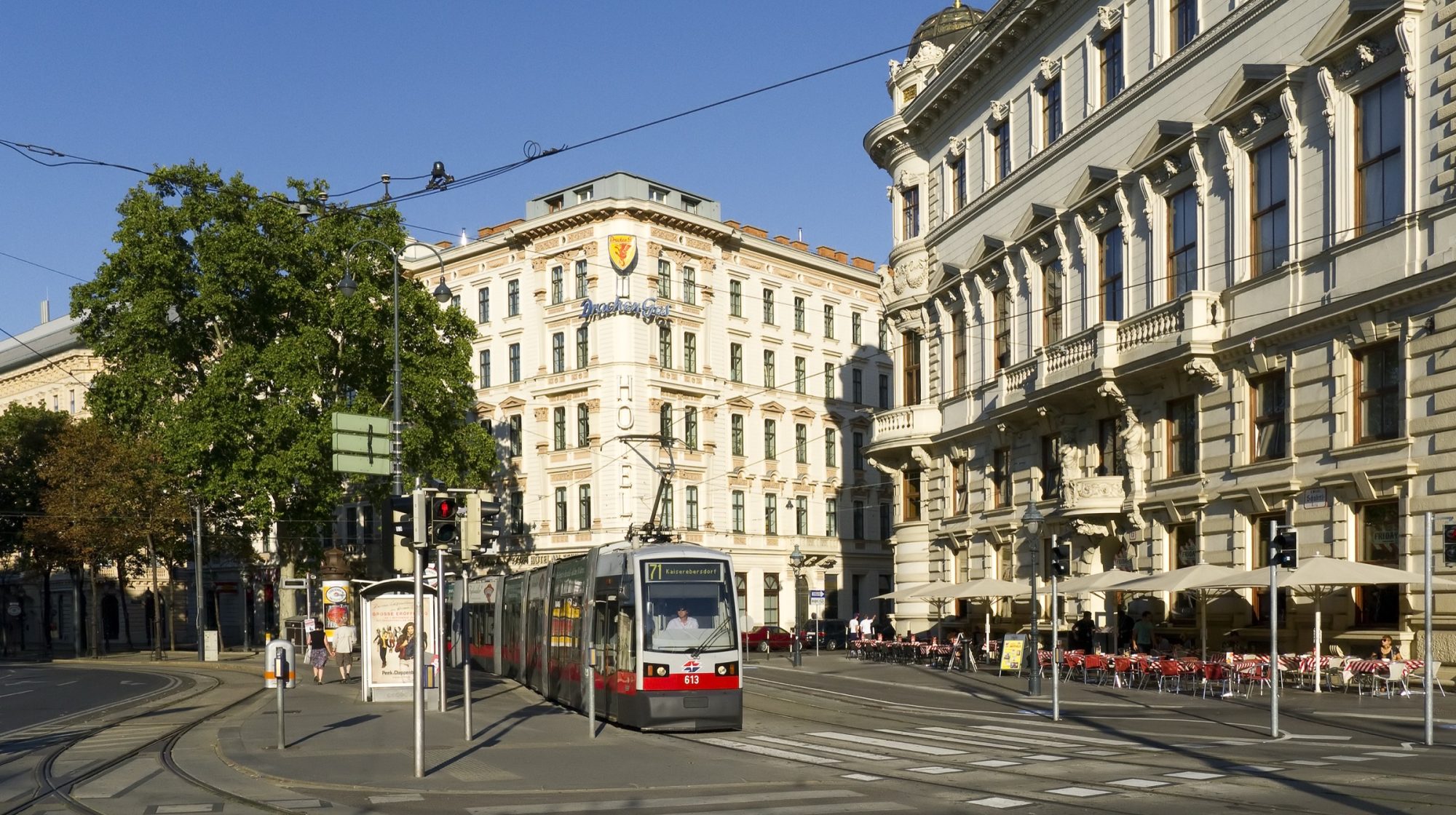
Vienna’s tram network is one of the largest in the world and is genuinely useful, not a heritage novelty. Lines 1, 2, D and 71 run along the Ringstrasse past the Opera, the Kunsthistorisches Museum, the Parliament, the Rathaus and the Burgtheater.
No single line does the whole Ring. Lines 1 and 2 overlap along part of it and then peel off, so a full circuit means riding one for about twenty minutes, getting off, and boarding the other. The complete loop takes around half an hour and costs a single fare, which makes it the cheapest sightseeing tour in the city. Sit on the right-hand side facing the direction of travel.
Routes to the five sights
Schönbrunn Palace
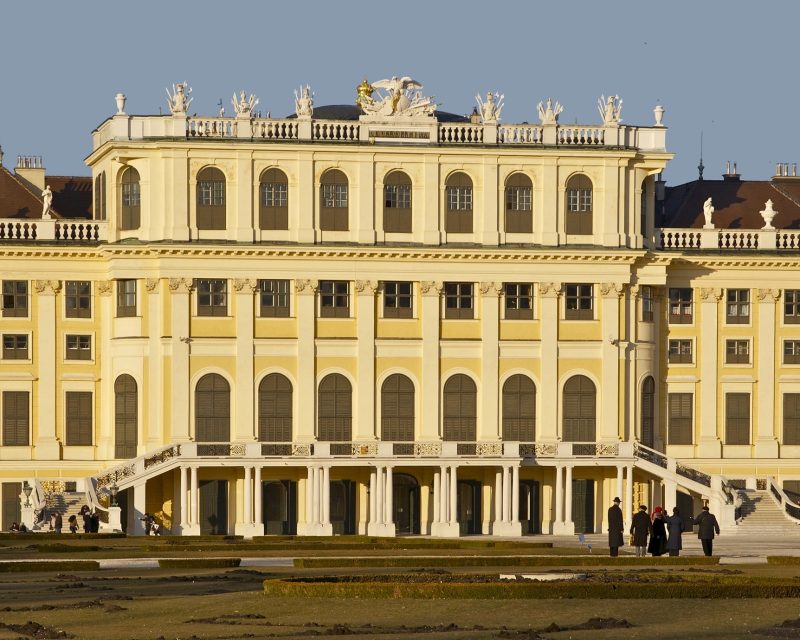
U4 to Schönbrunn, then five to seven minutes on foot to the main gate. Alternatively trams 10 and 60 and bus 10A stop directly outside the gates. From Westbahnhof, tram 60 is often quicker than changing to the U4. For the zoo and the Palm House, stay on the U4 one more stop to Hietzing, which puts you closer to that side of the park. Roughly fifteen minutes from Karlsplatz. See our Schönbrunn Palace page.
Kunsthistorisches Museum
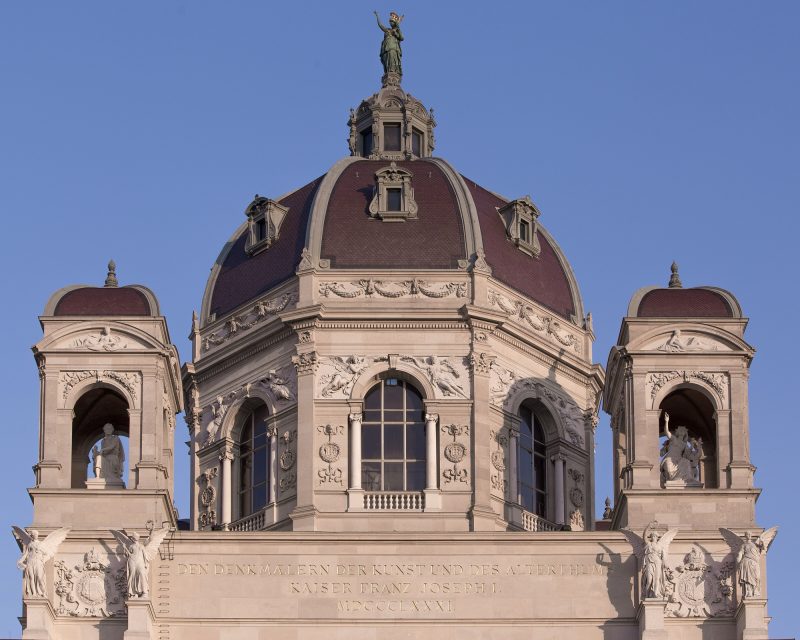
Trams 1, 2, D and 71 stop at Burgring, right outside. U2 to Museumsquartier or U2 and U3 to Volkstheater are both a two to three minute walk. From Westbahnhof take the U3 to Volkstheater. From Hauptbahnhof, tram D runs straight there. It is also about ten minutes on foot from Stephansplatz through the Hofburg and across Heldenplatz, which is a far better arrival than coming up from a platform. Details on our Kunsthistorisches Museum page.
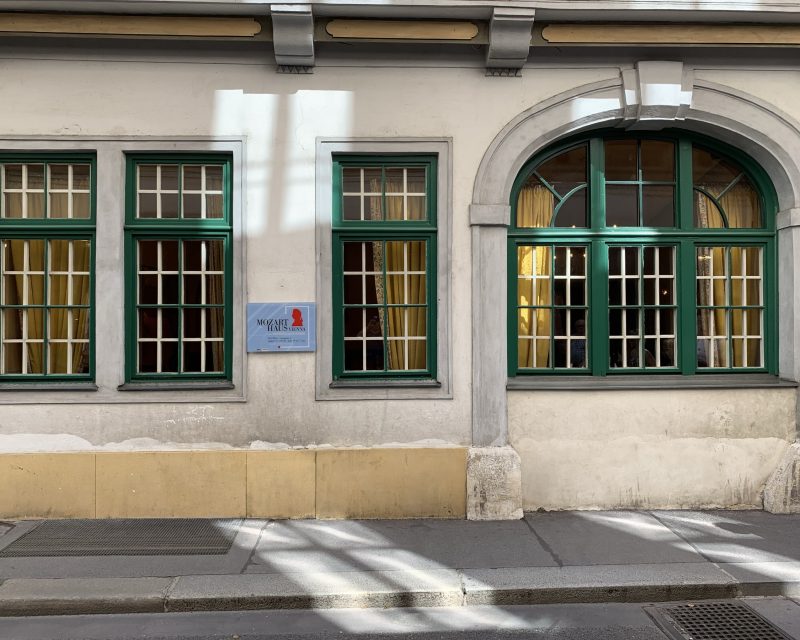
Mozarthaus Vienna
Domgasse 5, about two minutes from Stephansplatz on the U1 and U3. This is a walk-only destination in practice: the lanes behind the cathedral are pedestrianised and no tram gets closer than the Ring. See our Mozarthaus Vienna page.
The Belvedere
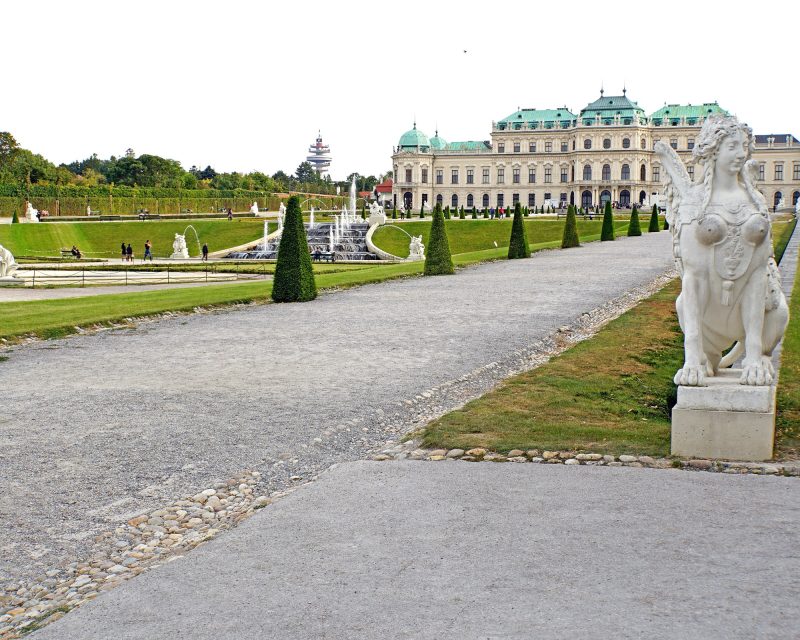
Tram D to Schloss Belvedere puts you at the Upper Belvedere’s main gate. Tram 71 to Unteres Belvedere serves the Lower Belvedere on Rennweg. Trams 18 and O and the S-Bahn all serve Quartier Belvedere behind the palace, about five minutes from the rear gate and handy if you are arriving from Hauptbahnhof. Our Belvedere page has the three addresses.
Donauturm
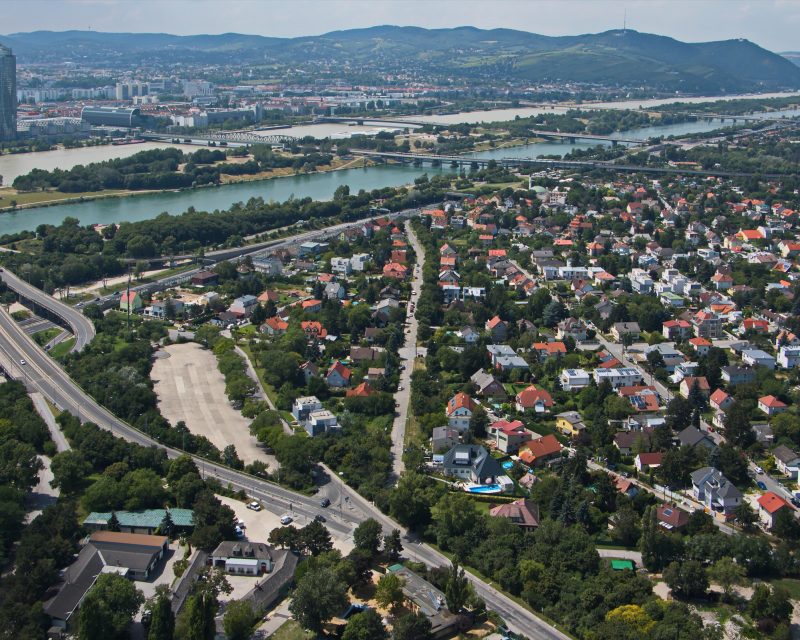
The only one that needs a change. U1 to Kaisermühlen-VIC or Alte Donau, or U6 to Neue Donau, then bus 20A to the Donauturm stop. Allow around 25 to 30 minutes from the centre. See our Donauturm page.
When to walk instead
Inside the Ring, walk. The old town is about a kilometre across and the U-Bahn stations are so close together that the stairs cost you the time you saved. Stephansplatz to the Kunsthistorisches is roughly ten minutes on foot through Graben, Kohlmarkt and the Hofburg, and it is one of the best walks in the city.
Beyond the Ring, ride. The Belvedere is walkable from Karlsplatz in about twenty minutes along Prinz-Eugen-Straße, but Schönbrunn and the Donauturm are not walks, they are journeys.
Two local habits worth adopting: stand on the right on escalators, and let people off before boarding. Vienna is quietly strict about both.
Once you know how you are getting there, the entry times are the other half of the plan. Time slots for all five sights are on our attractions page.